
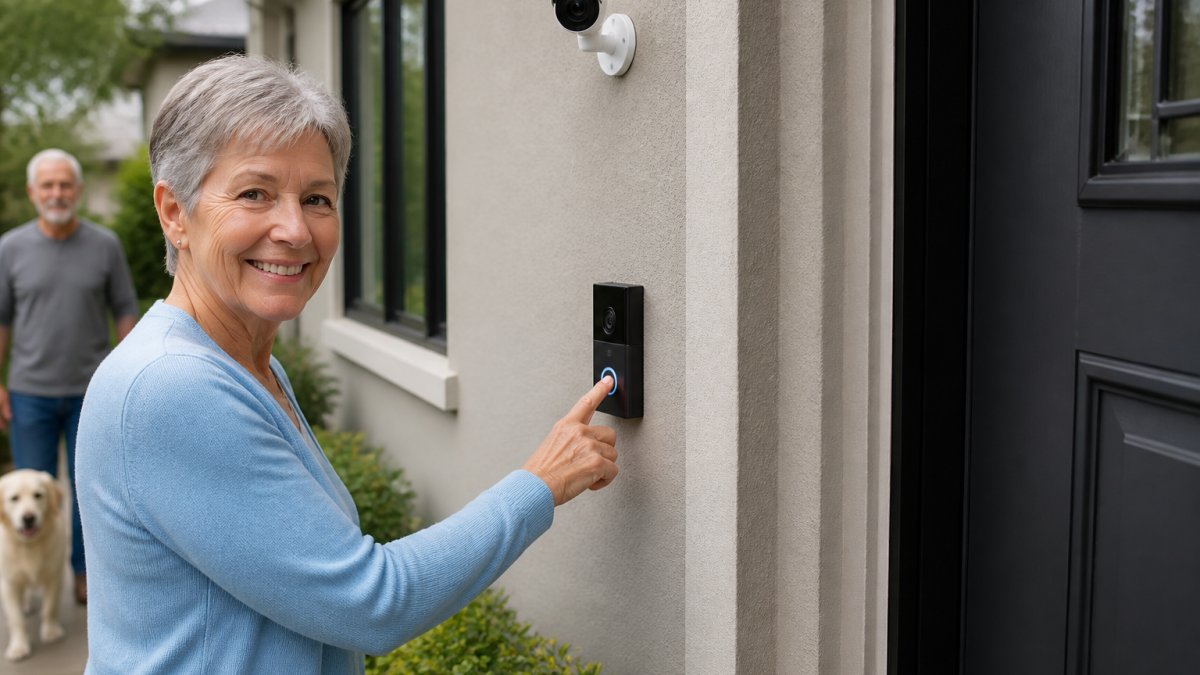
Last Updated: October 12, 2026
The choice between smart home security and traditional alarm systems shapes how you protect your home and respond to emergencies. Both have evolved, but operate on fundamentally different principles.
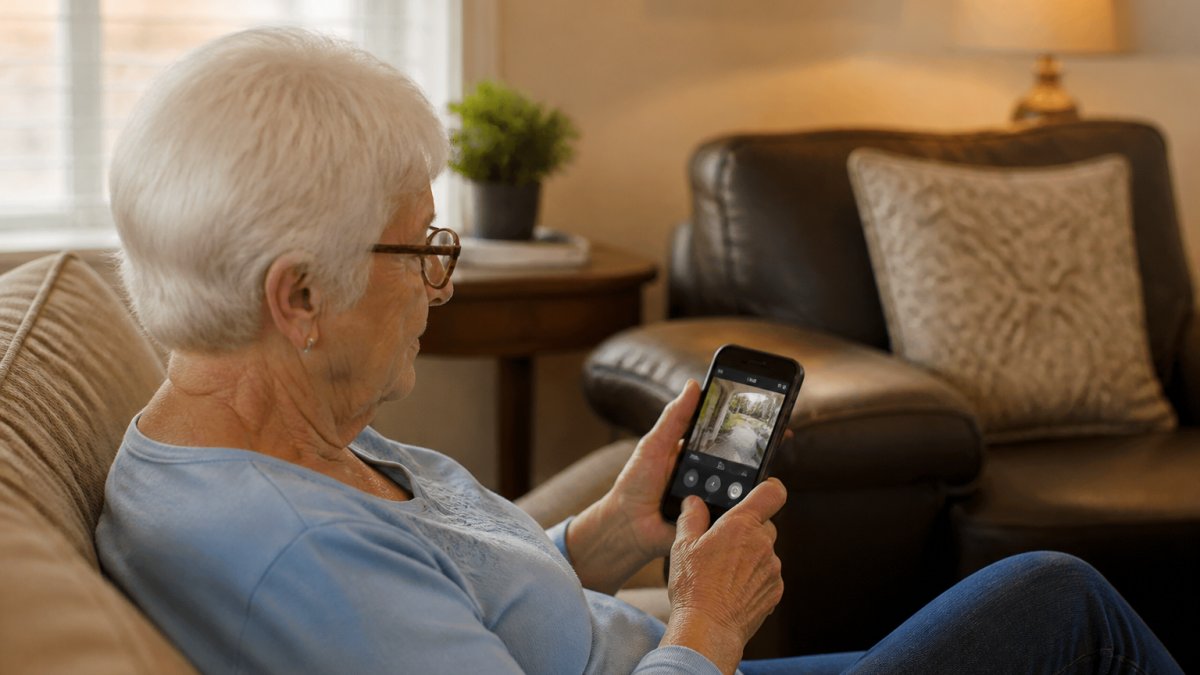
Smart home security systems connect devices to the internet, letting you monitor and control them from anywhere via smartphone apps.
For adults 55 and older, this choice matters even more: convenience against reliability, remote access against the peace of mind that someone is always watching.
Smart home security systems use connected devices, cameras, sensors, locks, and alarms, that communicate through your home's Wi-Fi network. When motion is detected or a door opens, the system sends real-time alerts to your phone, and you decide whether to contact authorities or use the app's emergency button.
The core appeal is visibility and control: you see a problem first instead of waiting for someone else to tell you.
The smartphone app is the nerve center of smart home security.
This matters for people managing multiple properties or adult children checking on aging parents: a quick notification tells you immediately if a door opened unexpectedly.
The trade-off: you're responsible for responding. If motion is detected at 2 a.m., the app alerts you, but calling police is your choice, which can feel empowering or exhausting depending on your comfort level.
Most smart home systems include video cameras with motion detection.
Motion alerts can be customized by zone, ignore the front window during the day, get alerts there after dark, which reduces false alarms and notification fatigue.
Footage typically stores in the cloud, so you can review recordings days or weeks later, valuable evidence for insurance or police.
Smart home systems work best when devices communicate: a smart lock can trigger the camera to record when the door opens, and a motion sensor can turn on lights and send an alert simultaneously. Some also integrate with voice assistants for hands-free arming.
This interconnection creates a responsive environment, but also more devices, more points of failure, and more to manage.
Traditional alarm systems are built around hardwired sensors connected to a central monitoring station. When a sensor detects an intrusion, the system triggers an alarm and signals the monitoring center, where a trained operator attempts to contact you and dispatches police if needed.
This model has been proven for decades: not flashy, but reliable when emergencies happen.
Door and window sensors are the foundation: magnetic switches that detect when an entry point opens. Interior motion sensors detect movement in protected areas.
The alarm serves a dual purpose: alerting you and scaring off intruders, the loud noise is a genuine deterrent.
Unlike smart systems, traditional alarms don't rely on your phone or internet. Sensors and alarm operate independently, so the system still works if power or internet fails.
When an alarm triggers, the monitoring center receives a signal and an operator calls your home to verify a real emergency. If you don't answer or confirm a problem, the operator dispatches police.
This human layer matters: a trained operator can listen for distress, ask clarifying questions, and give police context. For older adults living alone, that contact is reassuring.
Response times vary by location and police resources, but professional monitoring centers are designed to dispatch within minutes.
The monitoring model determines who responds when something goes wrong. This choice affects both cost and peace of mind.
Professional monitoring means trained operators watch your account around the clock.
This is especially valuable for people who are asleep, away, or unable to call for help quickly. For adults over 55 managing health issues, automatic dispatch can be lifesaving.
Professional monitoring requires a monthly subscription. The cost varies, but most services charge between $20 and $50 per month depending on features and response guarantees.
Self-monitoring means you receive alerts and decide whether to call police.
The advantage is lower cost, many self-monitored systems have no monthly fee beyond equipment.
For tech-comfortable adults, self-monitoring offers control and savings. For those who prefer someone else handling emergencies, professional monitoring provides peace of mind.
Some systems offer both: self-monitoring as default, with the option to upgrade to professional monitoring for specific times or situations.
Cost comparison between smart and traditional systems requires looking beyond the monthly fee. Equipment, installation, monitoring, and contracts all factor in.
Smart home systems typically cost less upfront. Many DIY smart systems start around $200 to $400 for a basic kit and can be installed by the homeowner in an afternoon.
Traditional alarm systems often require professional installation, adding $300 to $500 to the initial cost. Monthly professional monitoring typically runs $30 to $50, and many providers require multi-year contracts.
The calculation shifts over time. Over five years, a traditional system with professional monitoring might cost $2,000 to $3,500 total, while a smart system might cost $400 upfront plus any optional monitoring fees. (Source: Consumer Reports' guide to home security systems)
Traditional alarm companies often lock customers into 3-year contracts, with substantial early termination fees. This commitment reflects the monitoring service's business model: they invest in infrastructure and training.
Smart home systems typically operate month-to-month with no contract. You can cancel anytime. This flexibility appeals to renters and people uncertain about long-term plans.
For adults on fixed incomes, contract flexibility matters. But so does knowing help will definitely arrive if you need it.
| System Type | Typical Upfront Cost | Monthly Monitoring | Contract Term | Best For |
|---|---|---|---|---|
| Smart Home (DIY) | $200-400 | $0-15 (optional) | Month-to-month | Tech-comfortable, budget-conscious |
| Smart Home (Professional) | $400-700 | $20-30 | Month-to-month | Those wanting professional install |
| Traditional Alarm | $400-800 | $30-50 | 3-year typical | Those prioritizing guaranteed dispatch |
| SafeWell55 | Included in membership | Included | Month-to-month | Adults 55+ wanting bundled safety |
The convenience of smart systems comes with vulnerabilities. Internet-dependent technology fails when connectivity fails.
Smart home systems require Wi-Fi to send alerts and let you access the app.
Power outages affect both systems. Smart systems typically have battery backup for the hub and cameras, lasting 4-12 hours.
The real risk: if power and internet both fail, smart systems become partially blind. Cameras stop recording. Alerts don't send.
Traditional systems degrade more gracefully. Sensors and alarms still function.
For people living in areas prone to power outages or storms, this resilience matters.
Most reputable smart security providers encrypt footage and limit access to your account, but the data exists on servers you don't control.
Traditional systems store less data. The monitoring center knows when alarms trigger, but not continuous video. This reduces privacy exposure.
SafeWell55 addresses this concern directly.
Traditional systems avoid this risk by design. They simply don't store continuous video.
These terms get used interchangeably, but they're different, and the distinction matters for your decision.
Home automation controls your environment: lights, thermostats, locks, appliances. Home security detects threats and summons help.
A smart home system can do both: your smart lock is automation, your motion sensor is security.
Traditional alarm systems do one thing: security. They're not trying to control your lights or your thermostat.
The right choice depends on three factors: your risk level, your technical comfort, and your local emergency response capabilities.
If you live in a high-crime area, professional monitoring makes sense, you want trained operators dispatching police immediately. In a quiet, low-crime neighborhood, self-monitoring might be sufficient.
If you're away frequently, traveling, visiting family, remote access to cameras and smart locks adds value. If you're home most of the time, that feature matters less.
If you live alone, professional monitoring provides reassurance that someone is always watching. If you have family nearby, self-monitoring works.
Smart systems appeal to people who want control and customization. If you enjoy technology and want to tinker with automation, smart systems offer flexibility. If you prefer simplicity and don't want to manage apps and settings, traditional systems are less demanding.
For older adults, technical comfort varies widely. Some are highly skilled with smartphones. Others find apps frustrating. Be honest about your comfort level. A system that requires constant app management won't protect you if you don't use it.
Some insurance policies offer discounts for professionally monitored systems. Check with your insurer before deciding.
Some jurisdictions require permits for security systems or charge false alarm fees if police respond too frequently. Ask your local police department about false alarm policies.
A few areas have response protocols that work better with certain system types.
The choice between smart home security and traditional systems isn't about which technology is better.
Smart home security systems depend on internet connectivity and can be vulnerable if Wi-Fi networks are weak or unsecured. Devices may be targeted by hackers seeking access to personal data or home networks. Power outages can disable systems unless battery backup is installed. Unlike traditional hardwired systems, smart devices require regular software updates to patch security vulnerabilities. Data stored in the cloud raises privacy concerns about who can access camera footage and personal information. Conduct regular password changes, use strong encryption, and ensure your Wi-Fi network is password-protected to reduce risk.
Professional monitoring offers 24/7 response from trained monitoring centers that can dispatch emergency services immediately when alarms trigger, which is valuable if you are away from home or unable to respond quickly. Self-monitoring gives you direct control and real-time smartphone alerts, but requires you to verify threats and contact authorities yourself. Professional monitoring adds a monthly fee but reduces false-alarm liability in some areas. Self-monitoring saves on recurring costs but demands your attention and quick decision-making. The choice depends on your lifestyle, how often you are home, and whether you prefer outsourced emergency response.
Home security system costs vary widely based on equipment, installation, and monitoring choices. DIY systems generally require lower upfront equipment investment and flexible monthly monitoring fees. Professional installation and monitoring systems typically charge higher initial setup costs plus monthly subscription fees. Long-term costs also depend on contract length, with some providers requiring multi-year agreements. For specific pricing, contact providers directly, as costs change based on your property size, the number of sensors and cameras, and your location. Request quotes from multiple providers to compare total cost of ownership over several years.
Most smart home security systems require internet or cellular connectivity to send real-time alerts, enable remote access, and communicate with monitoring centers. However, some systems include cellular backup that activates if Wi-Fi fails, ensuring emergency alerts still reach your phone or a monitoring center. Local alarms and door/window sensors can function without internet, but you lose remote monitoring and smartphone notifications. Battery backup is essential for maintaining operation during power outages. If internet reliability is a concern in your area, choose a system with cellular backup or hybrid connectivity options to maintain protection during outages.
Home security focuses on detecting and responding to intrusions, theft, and emergencies through cameras, sensors, alarms, and monitoring. Home automation controls everyday functions like lighting, temperature, and locks for convenience and energy savings. Some modern systems blend both: a smart lock automates access but also provides security by logging who entered and when. A smart thermostat automates comfort but does not detect break-ins. When choosing a system, clarify whether you prioritize security (intrusion detection and emergency response) or automation (convenience and control), as some systems excel at one but not the other.