

Last Updated: October 2, 2026

A strong independent living app for safety combines emergency response, real-world usability, and reliable functionality when you need it most. (Source: studies on user interface design for older adults)
Top apps share three measurable traits: response time (under 60 seconds to dispatch), battery efficiency (constant GPS and monitoring can drain phones in 8-12 hours), and offline functionality (critical for areas with poor signal or rural locations).
Ease of use is measurable: button size (1 cm × 1 cm for arthritis), text size (16pt minimum), contrast ratios (4.5:1 or better), and steps to alert (fewer than three for cognitive impairment). Apps designed for general audiences often fail these standards.
The best apps clearly state what data is collected, who accesses it, and whether location data is encrypted. Honest apps let you choose between constant monitoring or periodic check-ins.
Fall detection has a 10-30% false-positive rate. The best apps send a confirmation prompt ("Did you fall?") instead of automatic dispatch, preventing unnecessary emergency calls while catching real falls.
Wearable integration (smartwatches, fitness trackers, medical alert pendants) enables wrist-based fall detection, heart rate monitoring, and alerts when your phone is out of reach.
The best independent living apps detect problems quickly, notify caregivers or emergency services without delay, and stay out of your way until needed. Apps requiring constant manual input or complex navigation fail because seniors stop using them.
This guide covers six independent living apps designed for safety, focusing on real-world usability, features that prevent emergencies or speed response, and honest trade-offs.
| App | Best For | Key Feature | Primary Focus |
|---|---|---|---|
| SafeWell55 | All-in-one safety and wellness | 24/7 virtual care + emergency alerts | Comprehensive safety bundled with healthcare |
| Caretaker | Medical alert on smartphone | Emergency SOS button + fall detection option | Direct emergency response |
| CheckIn More | Privacy-conscious seniors | Daily wellness check-ins without GPS | Lightweight daily monitoring |
| Medisafe | Medication management | Customizable reminders + caregiver syncing | Preventing medication errors |
| Mitti | Facility caregivers | Task management + incident reporting | Professional care coordination |
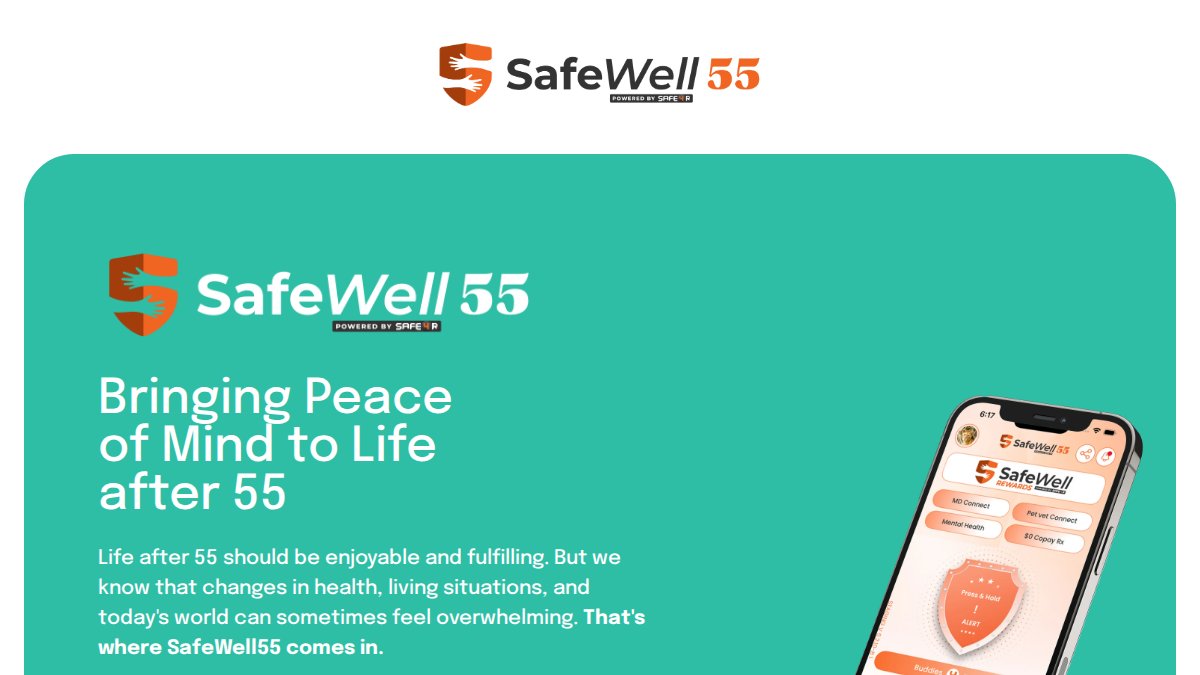
SafeWell55 bundles emergency alerts, 24/7 virtual care, prescription savings, digital security, and veterinary consultations into one membership.
A single tap alerts family or law enforcement. The virtual companion feature monitors you during walks or errands in real time. Additional features include 24/7 virtual care, prescription savings, digital security, and veterinary consultations, all integrated so you manage one login and payment method instead of five.
SafeWell55's digital security tools block fraudulent activity and educate members about scams, addressing a vulnerability that costs seniors billions annually.
Combined membership for couples includes shared safety features and health tools without duplicating costs, plus cash back rewards at over 300 retailers.
SafeWell55 integrates emergency response, healthcare access, financial protection, and caregiver peace of mind in one platform; most competitors excel at only one or two.
Caretaker connects you to emergency services fast with optional fall detection.
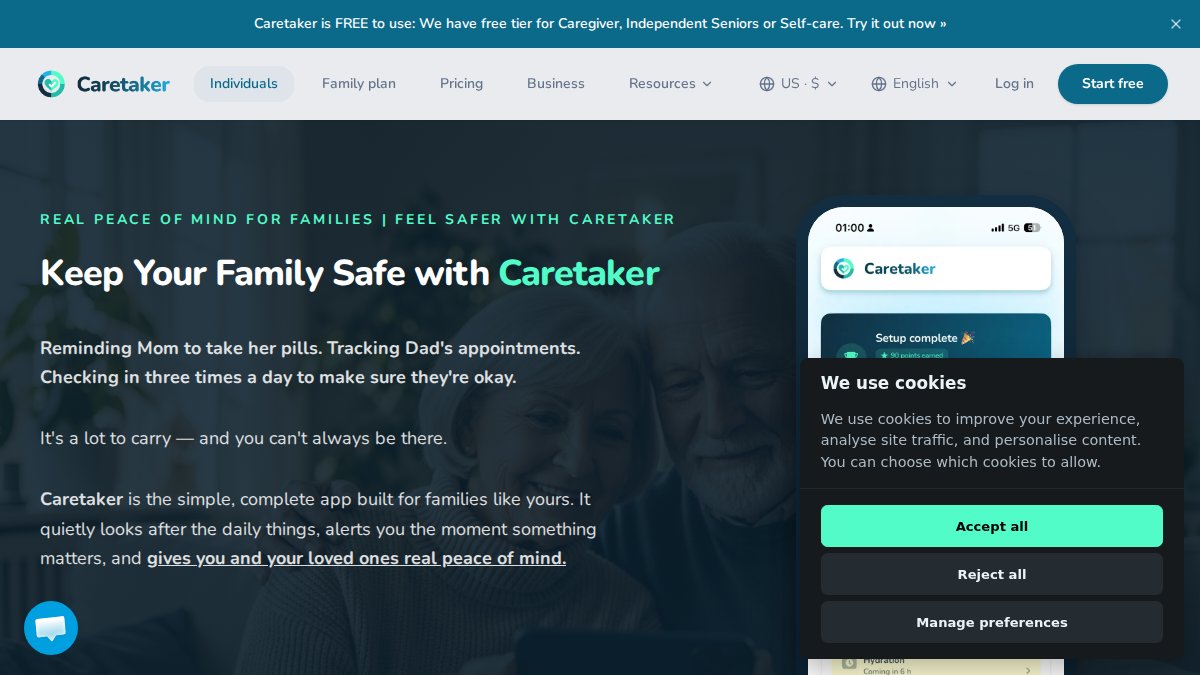
The SOS button connects you to emergency services with one press, no menus or confirmations. For disoriented or injured seniors, this speed matters.
Fall detection is optional: you choose whether to enable it and whether to alert emergency services or your caregiver first.
The caregiver dashboard provides visibility without intrusiveness: family members see check-in status and receive alerts without constant notifications.
Caretaker costs more than basic check-in apps because it offers direct emergency response integration, not just family notifications. Best for fall response and emergency connectivity.
Digital scams targeting seniors have grown sophisticated, with imposters posing as tech support, grandchildren, or government agencies.
SafeWell55's digital security tools educate members about scam patterns and provide active protection. Resources include recognizing phishing emails, verifying caller identity, and reporting scams.
Most independent living apps focus on physical safety; digital safety is equally critical and more commonly exploited. Seniors often have substantial savings and may be less familiar with online threats.
SafeWell55 combines education with active blocking to prevent unauthorized account and payment access, a gap in other independent living apps. (Source: research on the accuracy of fall detection technology)
Daily check-in apps verify wellness on a routine basis, catching problems before they become emergencies, different from emergency response systems.
CheckIn More offers daily check-ins without GPS tracking. You confirm you're okay; if you miss a check-in, your caregiver is alerted. Better battery life because no location services run constantly.
CheckIn More won't detect immediate falls or emergencies; it catches problems developing over hours or days.
The right independent living app depends on your specific situation and priorities. But most selection guides miss the factors that determine whether you'll actually use the app consistently, and whether it will work when you need it most.
For motor skill challenges: Button size, spacing, and confirmation requirements matter. Apps requiring precise taps on small buttons fail for tremor or reduced dexterity. Voice commands bypass this problem. Caretaker's SOS button is large and requires only one tap. CheckIn More uses simple tap-to-confirm interaction. Medisafe's reminders can be dismissed with a single tap or voice command.
For cognitive impairment: Interface complexity is the enemy. Apps with more than three steps to trigger an emergency alert create failure points. Seniors with early-stage dementia may forget they're using the app, forget how to navigate it, or become confused by multiple options. SafeWell55's virtual companion feature keeps a caring eye on you during a walk, an errand, or any outing. CheckIn More sends reminders at scheduled times, reducing the cognitive load of remembering when to check in. Medisafe's medication reminders are push notifications, not optional features you have to remember to open.
For vision loss: Text size, color contrast, and magnification support are critical. Apps designed for general audiences often use 12pt text and low contrast. Caretaker's SOS button is high-contrast and large. Medisafe's medication reminders include spoken alerts, not just visual notifications.
Choose SafeWell55 if you want comprehensive coverage (emergency response, healthcare access, medication savings, digital security) and you're comfortable with an all-in-one platform. Best for seniors who want to reduce app clutter and adult children managing a parent's safety remotely.
Choose Caretaker if emergency response is your primary concern and you want the fastest possible connection to emergency services. The focus is narrow but deep. Best for seniors with significant fall risk or those living alone who prioritize immediate help over broader health management. Fall detection drains more battery; disable it if battery life is critical.
Choose CheckIn More if privacy matters more than comprehensive monitoring, and you want daily verification of wellness without constant location tracking. Battery life is excellent because no GPS runs in the background. Offline functionality is partial. Best for seniors who are generally independent but want a safety net for unexpected problems, and for those in low-signal areas.
Choose Medisafe if medication management is your biggest challenge. Multiple prescriptions, complex timing, or a history of missed doses makes this app valuable. Caregiver syncing means family members can help monitor adherence without managing the app themselves. Battery impact is minimal. Best for seniors managing 4+ medications or those with cognitive impairment affecting medication adherence.
Choose Mitti only if you're managing care for multiple residents in a professional setting (assisted living facilities, professional caregivers). It's built for operations, not individual use.
Prioritize emergency SOS buttons, real-time location sharing with caregivers, daily check-in reminders, and integration with emergency response services. Fall detection, medication reminders, and 24/7 virtual care access are valuable additions. Ease of use matters most, complex apps won't be used consistently. Battery life and offline functionality ensure the app works when you need it most, even if your phone is running low or you lose connectivity temporarily.
Modern medical alert systems work through dedicated apps that let you tap an SOS button to contact emergency services, family, or both instantly. The app shares your location in real time, so responders know exactly where you are. Many systems include fall detection that automatically triggers an alert if you take a hard fall. Premium systems connect directly to professional monitoring centers that can dispatch emergency services on your behalf, providing an extra layer of response.
Look for apps with built-in digital security tools that monitor for phishing attempts, warn about suspicious links, and educate users about common scams targeting older adults. SafeWell55 includes cybersecurity protection designed specifically to guard against identity theft and financial fraud. Education is equally important, apps should provide tips on recognizing scams, verifying callers, and protecting passwords. Consider apps that let you set spending alerts or require caregiver approval for large transactions.
Some apps like Medisafe offer free versions with basic medication reminders, but comprehensive safety features, emergency response, GPS tracking, fall detection, and 24/7 virtual care, typically require a paid subscription. Free tiers are useful for medication management alone but lack the emergency response infrastructure seniors need for true peace of mind. Paid subscriptions usually range from budget-friendly options to comprehensive programs bundling health care, prescription savings, and security tools.
Yes. Most independent living apps include caregiver dashboards where adult children can view location, receive daily check-in confirmations, and get instant alerts if an emergency button is pressed or a fall is detected. You don't need invasive constant monitoring, daily check-ins and location sharing during outings provide reassurance without surveillance. Apps like SafeWell55 balance safety with privacy, letting your parent maintain independence while keeping you informed of their well-being.