.png)
Last Updated: September 29, 2026
Living independently after 55 is about more than just managing day-to-day tasks; it's about the ability to stay independent living alone while maintaining autonomy, dignity, and control over your life during what can be some of your richest years. The ability to stay independent living alone becomes increasingly important as you age, yet it requires intentional planning across multiple dimensions: physical safety, mental wellness, financial security, and social connection.
Independence doesn't mean isolation. It means having the systems, support, and safeguards in place so you can live on your own terms without unnecessary worry, for yourself or your family. Many adults in this stage discover that the real challenge isn't staying independent; it's knowing which tools and strategies actually make a difference.
Independence doesn't mean isolation. It means having the systems, support, and safeguards in place so you can live on your own terms without unnecessary worry, for yourself or your family. Many adults in this stage discover that the real challenge isn't staying independent; it's knowing which tools and strategies actually make a difference.
A medical alert system is a personal safety device or app that connects you to emergency responders or family members with a single button press. For someone living alone, it's the fastest way to get help when you need it most, whether that's a fall, chest pain, or any other medical emergency.
The core function is straightforward: you wear a device or keep an app on your phone, press the button or trigger an alert, and trained responders or your designated contacts are notified immediately with your location. But the best systems go further. They track your patterns, check in on you daily, and integrate with other health and safety tools you're already using.
When evaluating systems, look for these key features:
SafeWell55 includes emergency alert capabilities as part of its comprehensive membership, with features like emergency alerts, location sharing, and the ability to contact law enforcement if needed. The virtual companion feature is particularly valuable for people who live alone, it keeps a caring eye on them during a walk, an errand, or any outing.
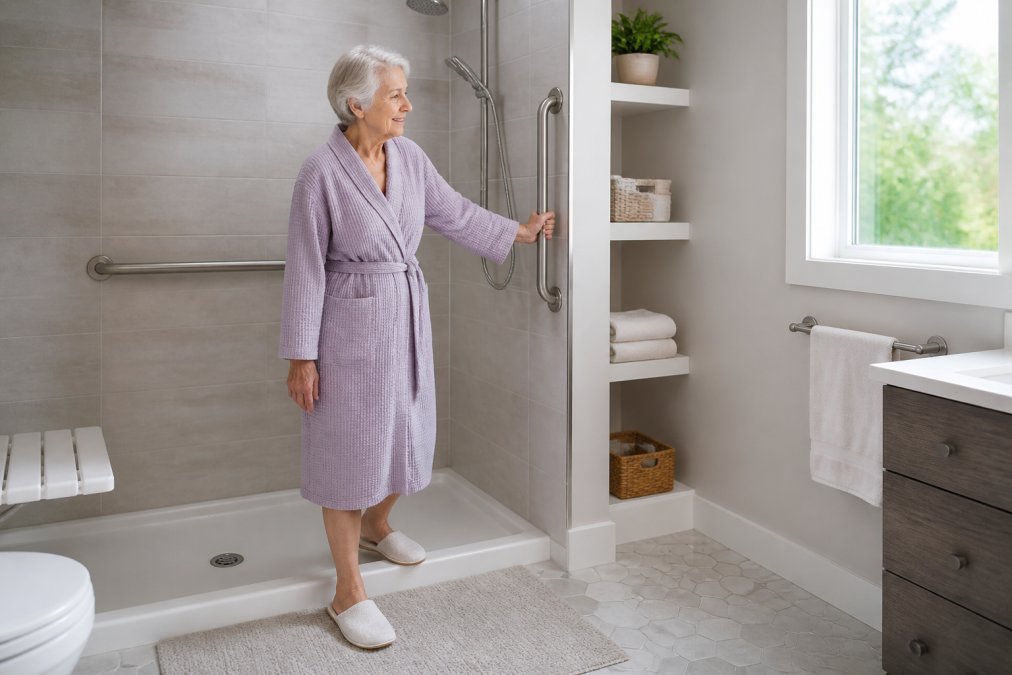
Your home is where you spend most of your time, so it's also where most accidents happen. Home safety modifications aren't about making your space feel institutional, they're about removing specific hazards that lead to falls, injuries, and loss of independence.
Falls are the leading cause of injury among adults living independently. A single fall can change everything: broken bones, loss of confidence, reduced mobility, and often the beginning of a decline that leads to moving out of your home. The good news is that most falls are preventable with straightforward modifications.
Start with the basics. Grab bars in bathrooms save lives, they're the single highest-return safety investment you can make. Install them near the toilet, in the shower, and along the tub. Use non-slip mats on bathroom floors and anywhere else water might create a slippery surface. Remove throw rugs and clutter from hallways and stairways. Ensure adequate lighting, especially on stairs and in hallways at night.
Many people resist these changes because they worry about how their home will look. The reality is that modern grab bars, non-slip mats, and lighting upgrades blend into contemporary homes. They don't announce "elderly person lives here", they announce "someone who values safety lives here."
Beyond the obvious modifications, think about your daily movement patterns. Where do you walk most? Where do you sit? Where might you reach for something unstable? These are the high-risk zones. Address them first.
Living alone means you're responsible for your own emergency response. That starts with having a plan before an emergency happens.
Keep a list of emergency contacts somewhere accessible, on your phone, on your refrigerator, and ideally with a trusted neighbor who has a spare key. Make sure at least one family member or friend knows your daily routine well enough to notice if something's wrong. Some people use daily check-in systems where they send a simple text or call at a set time each day; if they miss it, someone reaches out to check on them.
Store your medical information in an accessible place: current medications, allergies, chronic conditions, your doctor's contact information, and your insurance details. Many people keep this in a binder in a kitchen drawer or on their phone. Some wear medical alert bracelets with key information.
Consider what would happen if you fell and couldn't reach your phone. This is where emergency alert systems become essential, they work even when you can't move. If you live alone and don't have a formal alert system, at minimum arrange for regular check-ins with someone you trust.
Loneliness is a silent killer. Research consistently shows that social isolation carries health risks comparable to smoking or obesity (pubmed.ncbi.nlm.nih.gov). Yet many people living independently find themselves increasingly isolated, especially if mobility declines, friends move away, or family lives far off.
The antidote isn't forced socializing; it's intentional connection. This looks different for different people. Some thrive in group settings like senior centers or hobby clubs. Others prefer one-on-one relationships with close friends or family. Many benefit from a mix.
Start by identifying what kinds of interaction energize you. Do you enjoy learning? Volunteering? Physical activity? Creative pursuits? Pets? Once you know what matters to you, build your routine around it.
Seniors are disproportionately targeted by online scams, identity theft, and financial fraud (the FTC). The combination of living alone, potentially being less tech-savvy, and having accumulated savings makes you a target.
Living alone means managing your health largely on your own. This requires clear systems for medication, appointments, and monitoring your condition.
If you have diabetes, heart disease, arthritis, or any other chronic condition, managing it at home is possible with the right structure. Start by understanding your condition: what symptoms matter, what should trigger a call to your doctor, what you can manage on your own.
What you eat and how you move directly affect your independence. Poor nutrition leads to weakness and falls. Lack of movement accelerates decline.
Independence requires financial autonomy. This means understanding your income sources, managing your expenses, and planning for long-term care costs if needed.
Independence is a spectrum, not an absolute. There are stages where you can live alone with systems and modifications, and stages where you need additional support, whether that's a home health aide, moving to an assisted living community, or something in between.
Seniors living alone face several interconnected challenges: fall risks from home hazards, social isolation that can affect mental and physical health, medication management without reminders, delayed emergency response if an accident occurs, and difficulty maintaining home upkeep. Additionally, managing chronic conditions independently and staying alert to scams and fraud become more complex. The key is addressing these proactively through home modifications, regular social connection, and access to reliable support systems like medical alert services and telehealth.
Modern technology offers multiple layers of support. Medical alert systems with fall detection provide emergency response at the press of a button or automatically. Telehealth services bring doctors to your home without travel. Medication management apps send reminders and track prescriptions. Smart home devices control lighting, temperature, and security. Video calling keeps you connected to family and friends. Digital security tools protect against scams targeting seniors. Together, these tools create a safety net that allows you to stay in your home confidently while maintaining your autonomy.
Fall prevention requires both environmental changes and personal habits. Install grab bars in bathrooms near toilets and showers, use non-slip mats in wet areas, ensure adequate lighting throughout your home, remove tripping hazards like loose rugs, and keep frequently used items at waist height to avoid bending or reaching. Wear supportive footwear indoors, stay physically active to maintain balance and strength, and review medications with your doctor as some can increase fall risk. Consider a medical alert system that detects falls automatically, ensuring help arrives even if you cannot call for it yourself.
Digital security for seniors requires awareness and tools. Never share personal information like Social Security numbers, bank details, or passwords via email or unsolicited calls. Verify requests by contacting organizations directly using numbers from official websites. Use strong, unique passwords and enable two-factor authentication on important accounts. Keep software and devices updated with security patches. Be skeptical of unsolicited offers, prize notifications, and urgent requests. Consider using digital security services designed for seniors that monitor for fraud, alert you to suspicious activity, and provide education on common scams. Report suspected fraud to your bank and the FTC immediately.